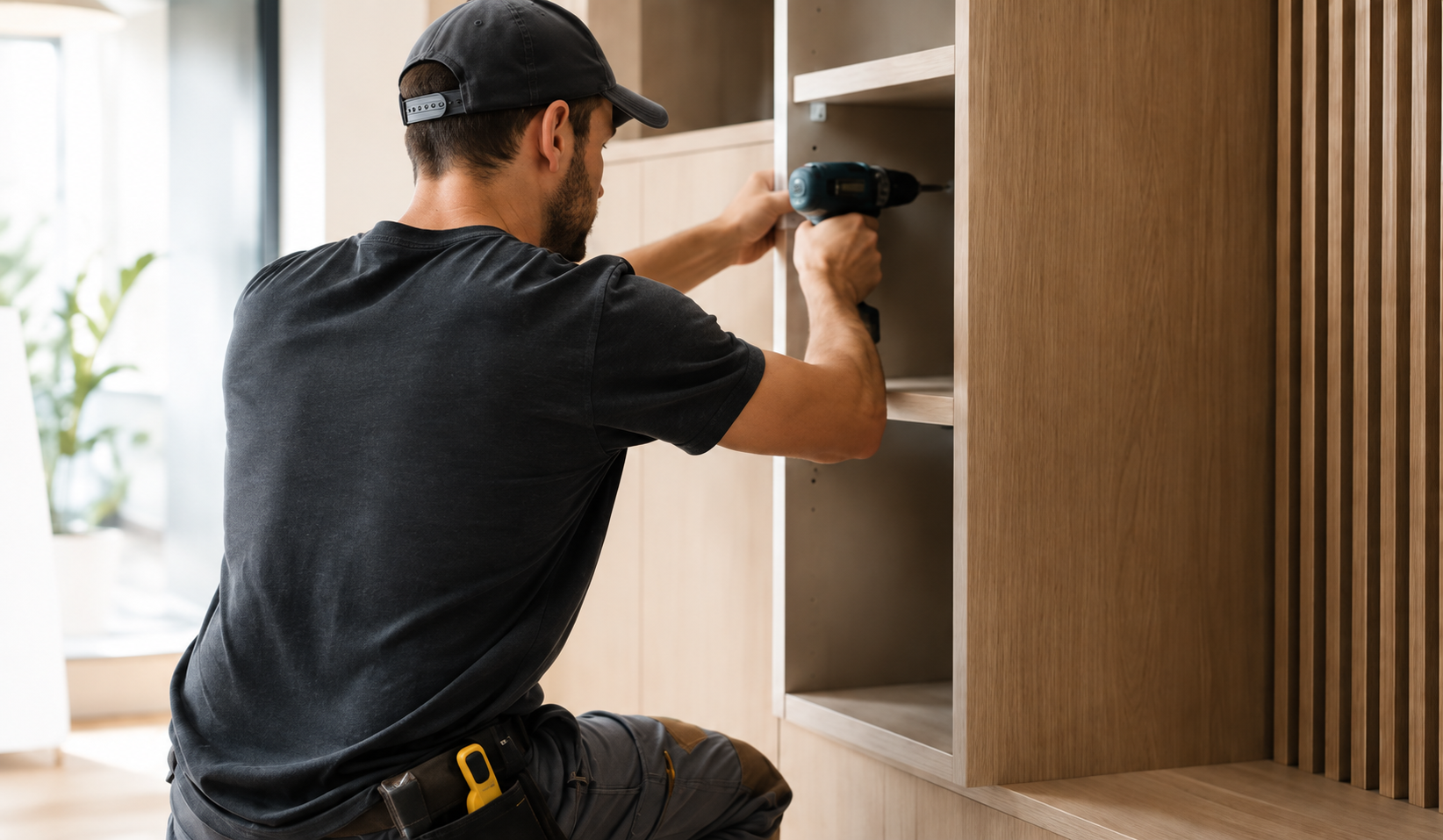
Connected Operations in Commercial Furniture 2026 | Avanto



Plan your expenses and deductions strategically each year
Egestas tincidunt ipsum in leo suspendisse turpis ultrices blandit augue eu amet vitae morbi egestas sed sem cras accumsan ipsum suscipit duis molestie elit libero malesuada lorem ut netus sagittis lacus pellentesque viverra velit cursus sapien sed iaculis cras at egestas duis maecenas nibh suscipit duis litum molestie elit libero malesuada lorem curabitur diam eros.
- Morbi fringilla molestie magna sed dictum. Praesent pharetra turpis augue.
- Cras mi purus, viverra vitae felis sit amet, tincidunt fringilla lorem.
- non mattis urna ex nec sem. Donec varius diam et suscipit venenati proin tincidunt
- Quisque euismod posuere lacus sit amet volutpat. Praesent vel imperdiet
Maintain accurate and organized financial records for easy reporting
Tincidunt pharetra at nec morbi senectus ut in lorem senectus nunc felis ipsum vulputate enim gravida ipsum amet lacus habitasse eget tristique nam molestie et in risus sed fermentum neque elit eu diam donec vitae ultricies nec urna cras congue et arcu nunc aliquam at.

Talk to a tax professional for expert guidance
At mattis sit fusce mattis amet sagittis egestas ipsum nunc scelerisque id pulvinar sit viverra euismod. Metus ac elementum libero arcu pellentesque magna lacus duis viverra pharetra phasellus eget orci vitae ullamcorper viverra sed accumsan elit adipiscing dignissim nullam facilisis aenean tincidunt elit. Non rhoncus ut felis vitae massa mi ornare et elit. In dapibus.
- Morbi fringilla molestie magna sed dictum. Praesent pharetra turpis augue.
- Cras mi purus, viverra vitae felis sit amet, tincidunt fringilla lorem.
- non mattis urna ex nec sem. Donec varius diam et suscipit venenati proin tincidunt
- Quisque euismod posuere lacus sit amet volutpat. Praesent vel imperdiet
Personalized Marketing: AI helps in analyzing customer data to create personalized marketing campaigns
At mattis sit fusce mattis amet sagittis egestas ipsum nunc. Scelerisque id pulvinar sit viverra euismod. Metus ac elementum libero arcu pellentesque magna lacus duis viverra. Pharetra phasellus eget orci vitae ullamcorper viverra sed accumsan. Elit adipiscing dignissim nullam facilisis aenean tincidunt elit. Non rhoncus ut felis vitae massa. Elementum elit ipsum tellus hac mi ornare et elit. In dapibus.
“Amet pretium consectetur dui aliquam. Nisi quam facilisi consequat felis sit elit dapibus ipsum nullam est libero pulvinar purus et risus facilisis”
Use accounting and tax software to make management easier
Placerat dui faucibus non accumsan interdum auctor semper consequat vitae egestas malesuada quam aliquam est ultrices enim tristique facilisis est pellentesque lectus ac arcu bibendum urna nisl pharetra bibendum felis senectus dolor commodo quam elementum sapien suscipit qat non elit sagittis aliquam a cursus praesent diam lectus tellus mi lobortis in amet ac imperdiet feugiat tristique nulla eros mauris id aenean a sagittis et pellentesque integer ultricies sit non habitant in cras posuere dolor fames.
Connected Operations in Commercial Furniture in 2026: How AI Workflow Automation Connects Manufacturers, Dealers, Reps, and Installers
What Is Connected Operations in Commercial Furniture?
Connected operations in commercial furniture is the state in which manufacturers, dealers, rep groups, designers, and installers share a single operational layer, where order data, acknowledgments, project status, and financial information flow automatically between every stakeholder without manual re-entry, email coordination, or disconnected system silos.
Most commercial furniture companies are not there yet. Disconnected systems reduce operational visibility by up to 40% (The Supply Chain Source, 2026) and in the commercial furniture supply chain, where a single project can span a designer, a dealer, multiple manufacturers, a rep group, and an installation crew, that visibility gap translates directly into project delays, margin erosion, and failed installs.
At MODEX 2026, the central theme was the shift from isolated technologies to fully orchestrated ecosystems. Companies are no longer investing in standalone solutions. They are prioritizing integrated platforms that synchronize people, processes, and machines across the supply chain (Honeywell PSS, 2026). For commercial furniture operations leaders, this shift is not optional. It is the operational model that separates companies that scale from those that stall.
Why Is Connected Operations Particularly Important for Commercial Furniture in 2026?
The commercial furniture supply chain has always been complex, with multiple manufacturers, custom specifications, long lead times, and coordinated installations across dozens of concurrent projects. What has changed in 2026 is the competitive pressure on companies that have not connected their operations.
Poor trading partner connections cost businesses an estimated $158 billion annually through inefficiencies, missed opportunities, and excess inventory costs (SPS Commerce, 2026). For commercial furniture dealers and manufacturers, those costs show up in specific places: manual order re-entry errors, delayed acknowledgment processing, missed project milestones, AP backlogs, and installers arriving on site without complete information.
72% of supply chain executives believe that automated mitigation capabilities are now mandatory for successfully navigating modern market disruptions (Tradeverifyd, 2026). In commercial furniture, market disruptions include manufacturer lead time changes, specification errors, and supply chain volatility, all of which require operational systems that can detect and respond to changes in real time.
The operational workflow automation layer, covering order acknowledgments, supplier statement reconciliations, and quote-to-cash handoffs, remained a mix of point tools and spreadsheet workflows even as planning platforms became aggressively AI-enabled by 2025 (Kognitos, 2026). In commercial furniture, that gap is even wider. The industry has been even slower than most to automate its operational layer, which means the competitive advantage available to early movers is significant.
What Does a Connected Commercial Furniture Operation Look Like in Practice?
Connected operations in commercial furniture follows a single project from specification through financial close, with every handoff automated and every stakeholder working from the same real-time operational view.
Stage 1: Specification and Design
A designer completes a product specification. In a connected operation, that specification flows automatically into the dealer's quoting system. No re-entry, no format conversion, no email attachment. The dealer receives import-ready data and begins the quoting process immediately.
Stage 2: Quoting
The dealer receives manufacturer PDFs and RFQs. In a connected operation, AI converts these documents automatically into structured SIF files compatible with Hedberg, 2020 Worksheet, and ProjectMatrix, eliminating the manual re-entry that currently takes hours across multiple manufacturer formats. 69% of compliance and supply chain teams spend 11 or more hours each week on manual data translation to standardize formats (Tradeverifyd, 2026). PDF to SIF conversion eliminates this entirely for the commercial furniture quoting workflow.
Stage 3: Order Entry and Acknowledgment
The dealer issues purchase orders to manufacturers. In a connected operation, acknowledgments are matched against POs automatically, field by field, with discrepancies flagged and routine confirmations processed without human intervention. Dealers using Avanto's acknowledgment comparison report 87% time savings on this workflow alone.
Stage 4: Project Management
Orders are tracked in real time across every manufacturer. Project milestones, shipment notifications, and delivery confirmations flow automatically to every stakeholder, including the dealer, the designer, the rep group, and the installation team. No manual status updates. No conflicting versions of project status assembled from email chains.
Stage 5: Installation
The installation team receives complete scope documentation, installation drawings, and product confirmations automatically before the installation is scheduled. AI early adopters report 15% reductions in logistics costs, 35% lower inventory levels, and 65% improvements in service efficiency (Digiparser, 2026). For commercial furniture installers, the most immediate efficiency gain is arriving on site with complete information, eliminating failed installs and return visits that erode installation margin.
Stage 6: Accounting and Financial Close
Invoices are matched to purchase orders automatically. AP is processed without manual handling. Collections, vendor statements, and month-end reporting flow from the same operational data that drove the project, with no reconciliation required between systems that were never connected.
What Are the Biggest Barriers to Connected Operations in Commercial Furniture?
Legacy Systems That Cannot Be Replaced
Most commercial furniture companies run on business systems that have been in place for years, including Hedberg, e-manage|ONE, ProjectMatrix, and CFI Suite. The assumption that connected operations requires replacing these systems is the most common reason companies delay.
It does not. AI can start by reading what your team already receives every day, including PDFs, emails, and attachments, extracting fields into a standard schema so dates, references, quantities, and totals land in predictable columns, then handing off the result to existing business systems or workflow tools (Digiparser, 2026). Connected operations is an overlay on existing systems, not a replacement of them.
Inconsistent Data Formats Across Manufacturers
Every manufacturer in the commercial furniture supply chain sends data differently, with different PDF layouts, different order formats, and different acknowledgment structures. Without AI that normalizes across these formats automatically, connected operations requires a human translator at every handoff.
The operational team's capacity to respond was the real bottleneck, not planning algorithms (Kognitos, 2026). For commercial furniture dealers managing dozens of manufacturer relationships, data format inconsistency is the most concrete manifestation of this bottleneck. AI workflow automation that handles format variance automatically removes it.
Siloed Teams That Operate on Different Systems
Dealers, manufacturers, rep groups, and installers each have their own business systems and communication protocols. Connecting them does not mean forcing them onto a single platform. It means creating an operational layer that automates the data exchange between their existing systems.
Driving this change requires solutions that do more than automate. They need to create environments where every asset communicates and every process improves (C5MI, 2026). In commercial furniture, this means every stakeholder gets the right information at the right time without manual coordination.
How Does AI Workflow Automation Enable Connected Operations Without Rip-and-Replace?
Automation is shifting from a nice-to-have to an essential value. Rather than replacing labor entirely, most companies are using automation to support their workforce through AI-enabled optimization (Ryder, 2026). For commercial furniture operations, this means AI workflow automation that:
- Connects existing systems through APIs, EDI, and universal connectors, without requiring any system replacement or upgrade
- Normalizes data across formats, converting PDFs, emails, and EDI documents into structured data that every downstream system can read automatically
- Automates handoffs between stakeholders, triggering the next step in the workflow when the previous step completes, without a human relaying information between systems
- Escalates exceptions to the right person, handling routine transactions automatically while routing genuine exceptions to the team member best positioned to resolve them
This is the architecture of connected commercial furniture operations. Not a new system that replaces everything. A layer that connects everything that already exists.
How Does Avanto Connect Commercial Furniture Operations Without Rip-and-Replace?
Avanto is the AI-powered workflow automation platform built exclusively for the commercial furniture industry. Avanto connects manufacturers, dealers, rep groups, and installers through a single operational layer, Strata, without replacing existing ERPs, CRMs, or business systems.
For dealers: Order entry, order acknowledgment processing, PDF to SIF conversion, accounts payable, quoting, and supplier coordination, all automated end-to-end.
For manufacturers: Centralized dealer orders, automated acknowledgment processing, and real-time updates to rep CRM tools, reducing escalations and improving order accuracy across the dealer network.
For rep groups: Order data capture, commission tracking, and CRM syncing, automated across manufacturer and dealer relationships.
For installers: Complete scope documentation, installation drawings, and product confirmations delivered automatically before every installation is scheduled.
Integrations: Hedberg, 2020 Worksheet, ProjectMatrix, e-manage|ONE, and CFI Suite, via APIs, EDI, or Avanto's Universal Connector. No platform replacement required.
Proven results across 130+ clients:
- 87% time savings on AP processing and order acknowledgment processing
- 75% time savings on quoting
- $75,000+ average annual savings per dealership
- $325M+ in monthly transactions processed
Clients include Workscapes, Insidesource, BKM Total Office, and Working Spaces.
What Is the First Step Toward Connected Operations for a Commercial Furniture Company?
Connected operations does not start with technology selection. It starts with operational mapping, understanding exactly where the disconnections exist, what they are costing, and which connections would deliver the highest ROI.
Good automation removes routine decisions from people. Great automation also makes the hard decisions easier for people to make, aiming for controlled operations rather than lights-out operations (Digiparser, 2026). For commercial furniture companies, controlled operations means knowing which workflows to automate, which exceptions to escalate, and which human decisions to preserve, all before selecting any technology.
The Avanto Assessment is an 11-day operational engagement that maps your current workflows across six focus areas, identifying exactly where connections are missing, what they are costing, and which automations would deliver the highest ROI. Every assessment delivers a custom roadmap yours to keep regardless of what you decide next.
Connected operations in commercial furniture is not a technology project. It is an operational discipline, mapping where information currently moves manually, then automating those handoffs one by one until every stakeholder in the supply chain works from the same real-time operational view. The companies that do this in 2026 will not be reversing course. The ones that wait will be catching up.
Sources:
- Honeywell PSS, MODEX 2026 Recap: Key Trends Shaping the Future of Supply Chains, June 2026
- SPS Commerce, 2026 Demand Report: Key Supply Chain Trends, March 2026
- Tradeverifyd, 79 Supply Chain Statistics To Know in 2026, May 2026
- Kognitos, Top AI Automation Tools for Supply Chain Operations in 2026, May 2026
- Digiparser, Supply Chain Automation: The 2026 Comprehensive Guide, May 2026
- Ryder, 2026 Supply Chain Trends, 2026
- C5MI, Five New Digital Transformation Trends For Supply Chains In 2026, December 2025
- The Supply Chain Source / SPS Commerce, 2026 Supply Chain Trends, 2026
Operational statistics (87% AP time savings, 75% quoting time savings, $75,000+ annual savings, 130+ clients, $325M+ monthly transactions) sourced from Avanto client data.
Avanto is the leading AI-powered workflow automation platform for the commercial furniture industry. Learn more at goavanto.com.