

Plan your expenses and deductions strategically each year
Egestas tincidunt ipsum in leo suspendisse turpis ultrices blandit augue eu amet vitae morbi egestas sed sem cras accumsan ipsum suscipit duis molestie elit libero malesuada lorem ut netus sagittis lacus pellentesque viverra velit cursus sapien sed iaculis cras at egestas duis maecenas nibh suscipit duis litum molestie elit libero malesuada lorem curabitur diam eros.
- Morbi fringilla molestie magna sed dictum. Praesent pharetra turpis augue.
- Cras mi purus, viverra vitae felis sit amet, tincidunt fringilla lorem.
- non mattis urna ex nec sem. Donec varius diam et suscipit venenati proin tincidunt
- Quisque euismod posuere lacus sit amet volutpat. Praesent vel imperdiet
Maintain accurate and organized financial records for easy reporting
Tincidunt pharetra at nec morbi senectus ut in lorem senectus nunc felis ipsum vulputate enim gravida ipsum amet lacus habitasse eget tristique nam molestie et in risus sed fermentum neque elit eu diam donec vitae ultricies nec urna cras congue et arcu nunc aliquam at.

Talk to a tax professional for expert guidance
At mattis sit fusce mattis amet sagittis egestas ipsum nunc scelerisque id pulvinar sit viverra euismod. Metus ac elementum libero arcu pellentesque magna lacus duis viverra pharetra phasellus eget orci vitae ullamcorper viverra sed accumsan elit adipiscing dignissim nullam facilisis aenean tincidunt elit. Non rhoncus ut felis vitae massa mi ornare et elit. In dapibus.
- Morbi fringilla molestie magna sed dictum. Praesent pharetra turpis augue.
- Cras mi purus, viverra vitae felis sit amet, tincidunt fringilla lorem.
- non mattis urna ex nec sem. Donec varius diam et suscipit venenati proin tincidunt
- Quisque euismod posuere lacus sit amet volutpat. Praesent vel imperdiet
Personalized Marketing: AI helps in analyzing customer data to create personalized marketing campaigns
At mattis sit fusce mattis amet sagittis egestas ipsum nunc. Scelerisque id pulvinar sit viverra euismod. Metus ac elementum libero arcu pellentesque magna lacus duis viverra. Pharetra phasellus eget orci vitae ullamcorper viverra sed accumsan. Elit adipiscing dignissim nullam facilisis aenean tincidunt elit. Non rhoncus ut felis vitae massa. Elementum elit ipsum tellus hac mi ornare et elit. In dapibus.
“Amet pretium consectetur dui aliquam. Nisi quam facilisi consequat felis sit elit dapibus ipsum nullam est libero pulvinar purus et risus facilisis”
Use accounting and tax software to make management easier
Placerat dui faucibus non accumsan interdum auctor semper consequat vitae egestas malesuada quam aliquam est ultrices enim tristique facilisis est pellentesque lectus ac arcu bibendum urna nisl pharetra bibendum felis senectus dolor commodo quam elementum sapien suscipit qat non elit sagittis aliquam a cursus praesent diam lectus tellus mi lobortis in amet ac imperdiet feugiat tristique nulla eros mauris id aenean a sagittis et pellentesque integer ultricies sit non habitant in cras posuere dolor fames.
Why Furniture Dealers Struggle to Scale Past a Certain Revenue Point
Most contract furniture dealerships grow the same way. A strong principal, a reliable sales team, and a handful of manufacturer relationships build momentum. Revenue climbs. The team expands. New clients come in. And then, at some point, something stops working.
The deals are there. The relationships are strong. But the business isn't growing the way it should. Projects are taking longer. Errors are increasing. The team is working harder without producing more. And no one can quite explain why.
The reason is almost always the same. About 80–90% of all contract furniture dealerships are run by sales. They're sales organizations. Because of this, they have relatively good sales processes but lack a solid back-office infrastructure. When a dealership is small, that imbalance doesn't matter much. When volume grows, it becomes the ceiling.
The Real Reason Growth Stalls
Scaling a dealership doesn't just mean doing more of the same. It means handling more quotes, more orders, more manufacturers, more projects, and more client relationships simultaneously — without proportionally increasing the overhead required to manage them.
The dealers who scale past a certain revenue point do so because their operations can absorb more volume without breaking down. The ones who plateau are usually running operations that were designed for a smaller business. They've grown their sales capacity without growing their operational infrastructure to match.
Legacy systems, manual processes, and disconnected tools are slowing down many dealerships. These inefficiencies make it difficult to scale, respond quickly to clients, or compete with more digitally advanced players.
The bottleneck isn't the market. It's the back office.
What the Ceiling Actually Looks Like
The scaling ceiling in contract furniture doesn't announce itself. It shows up as a pattern of symptoms that are easy to misread.
Quotes take longer as volume increases. In a low-volume dealership, a coordinator manually re-entering data from manufacturer PDFs is manageable. At higher volume, the same process becomes a bottleneck that slows every quote in the pipeline. Manual quoting, proposals, and contracting, inconsistent approval processes, limited enablement resources, and poor visibility into deal progress cause reps to lose deals.
Errors increase with team size. When processes depend on individual accuracy rather than system-enforced rules, error rates grow with the team. A pricing error that one person would catch becomes invisible when three people are handling different parts of the same order.
Administrative overhead grows faster than revenue. Processes involving too many stakeholders can lead to bottlenecks, miscommunication, and delays. Automation presents an opportunity to streamline repetitive or time-consuming tasks, freeing up staff to focus on higher-value activities. In dealerships where every order requires manual coordination across quoting, procurement, acknowledgment, and invoicing, the cost of processing each order rises with volume — compressing margin exactly when revenue should be expanding it.
Managers become the bottleneck. When approvals, pricing confirmations, and order reviews all route through a principal or operations manager, that person's capacity limits the dealership's throughput. Paper-based or email approval processes create delays and audit trail gaps. Managers become bottlenecks, and urgent purchases get stalled in bureaucracy.
Visibility disappears. At small scale, a principal can track every project in their head. At larger scale, that's impossible. Without systems that provide real-time visibility into quotes, orders, and deliveries, decisions get made on incomplete information and problems surface at the worst possible time.
The Three Operational Gaps That Create the Ceiling
Gap 1: Processes built for a smaller business
Most contract furniture dealerships build their processes around what works at the time. Early on, a spreadsheet is fine. Email threads for approvals are manageable. Manual re-entry from manufacturer PDFs is annoying but not catastrophic.
As volume grows, those processes don't scale. They create drag. Many contract furniture companies lack good communication between the manufacturer, dealer, and other key stakeholders. Using automation to seamlessly sync between the manufacturer, dealer and identified stakeholders allows dealers to share price acknowledgments, purchase orders, order acknowledgments, quotes, and price agreements without the need for emails and phone calls.
Every manual handoff is a point where speed is lost and errors can enter. In a dealership processing 20 orders a month, that's manageable. In one processing 200, it's a structural problem.
Gap 2: Systems that don't talk to each other
The contract furniture channel runs on specialized platforms — Hedberg, ProjectMatrix, 2020 Worksheet, e-manage|ONE. Most dealerships also run an ERP for financials and use manufacturer portals for ordering. When these systems don't integrate, data has to move between them manually.
When their business systems aren't connected, contract furniture dealers have to move data manually between those systems — a process that leads to confusion, errors and the inability to meet planned targets due to inefficient coordination between the planning department, installation teams and other stakeholders.
At higher volume, the cost of that manual movement — in time, in errors, and in the team capacity required to manage it — becomes a direct constraint on growth.
Gap 3: No operational visibility
Scaling a dealership requires making fast decisions about real situations. Which projects are at risk? Where are orders delayed? What's sitting in the approval queue? Where is margin leaking?
In dealerships running manual operations, answering those questions requires asking people. Asking people takes time. And by the time the answer comes back, the situation has changed.
Data is often scattered across various departments and systems. Without real-time data, it becomes increasingly difficult to improve operational efficiency and meet customer deadlines. Operational visibility isn't a reporting problem — it's a systems problem. Dealers who have it make better decisions faster. Dealers who don't are always reacting.
What Dealers Who Scale Successfully Do Differently
The dealerships that break through the scaling ceiling share a pattern. They treat operations as infrastructure, not overhead. They invest in systems that connect their workflows before the volume pressure forces them to. And they build processes that get more efficient as order volume grows, not less.
Specifically, they do three things:
They automate the high-frequency, low-value work first. Quote data entry, invoice matching, order acknowledgment tracking — these are the tasks that consume the most time at scale and deliver the least strategic value. Automating them doesn't reduce the team; it redirects the team toward work that actually requires human judgment.
They connect their systems before they need to. Integration is hardest when the business is already under pressure. Dealers who build connected infrastructure at $10M can scale to $25M without rebuilding their operations from scratch.
They create visibility at the project level, not just the financial level. Knowing revenue is healthy is not the same as knowing which projects are at risk. Dealers who track orders, acknowledgments, and deliveries in real time can manage by exception rather than by constant follow-up.
What Strata Addresses
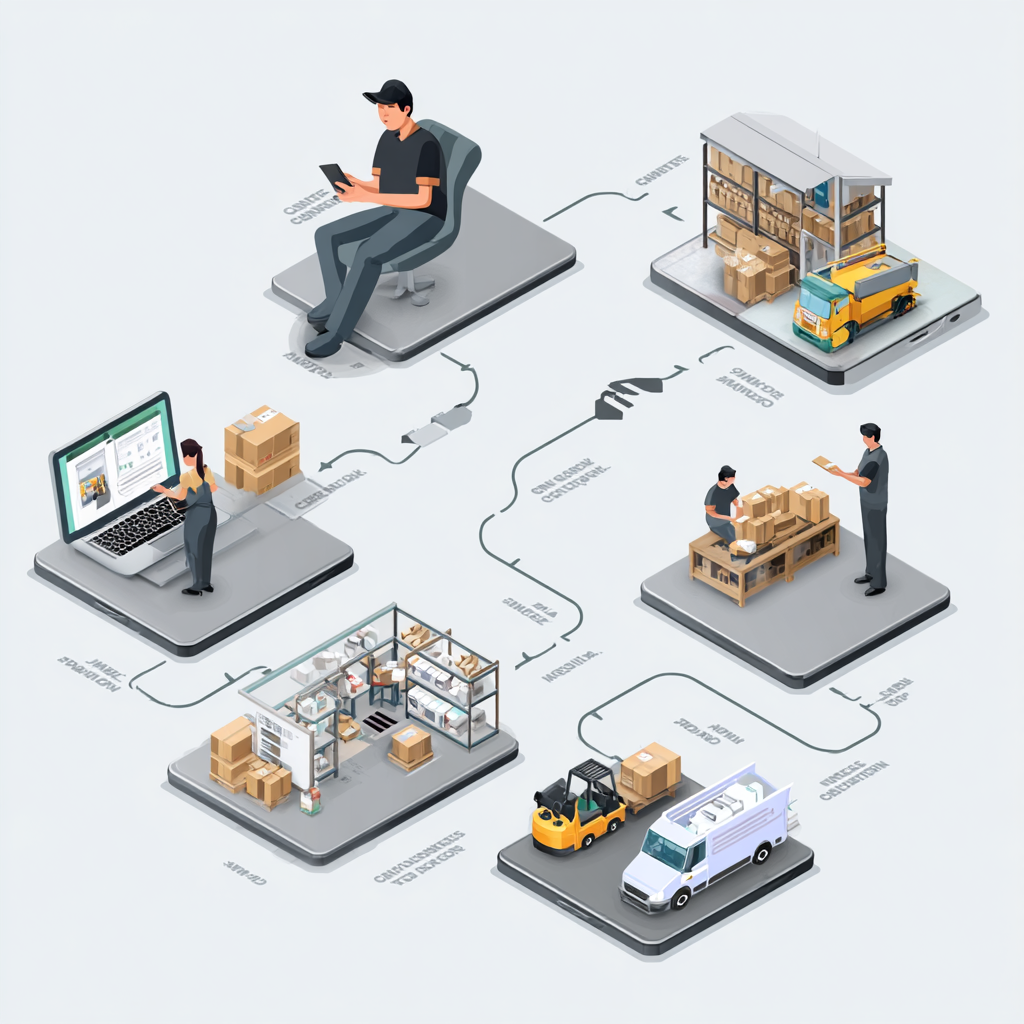
Strata is Avanto's workflow automation platform built specifically for the commercial interiors and contract furniture channel. It connects the five operational areas where most dealerships hit their ceiling:
Quote-to-Cash — enforces pricing rules, transfers data between quoting and ordering without re-entry, and connects order data to invoicing in a single workflow. Strata clients report a 75% reduction in quoting time.
Order and Project Management — connects order status, delivery tracking, and project milestones so teams manage by exception rather than by follow-up.
AP and Financial Operations — automates three-way invoice matching, reducing AP processing time by 87% for Avanto clients.
Shipping and Logistics — connects delivery data to the order record so teams have real-time visibility without chasing manufacturers.
Catalog Management — keeps manufacturer pricing and product data current automatically so every quote reflects what's actually available today.
Strata integrates natively with Hedberg, ProjectMatrix, 2020 Worksheet, e-manage|ONE, and ERP platforms including NetSuite, Epicor, and Acumatica. It supports 130+ dealer clients processing $325M+ in monthly transactions.
The scaling ceiling in contract furniture is real — but it's an operational problem, not a market problem. And operational problems have operational solutions.
To see how Strata fits your dealership's workflow, reach out at sales@goavanto.com or visit goavanto.com.